Important: Can You Put Juicer Parts in the Dishwasher?
In most cases, no.
Most slow juicer manufacturers do not recommend using a dishwasher because:
- High temperatures can warp plastic components
- Strong detergents may damage surfaces
- Fine mesh screens can be affected over time
Exception
One notable exception is the Sana 929, which is made from 100% stainless steel. This makes it far more resistant to heat and allows for dishwasher-safe cleaning.
For all other juicers, hand washing remains the safest and most effective method.
Best Practices for Keeping Your Juicer in Top Condition
- Clean immediately after use – dried pulp is much harder to remove
- Use warm water (up to 50°C) – helps dissolve residue without damaging parts
- Focus on the juicing screen – clean from both sides and check for blocked holes
- Avoid abrasive tools – they can scratch surfaces and trap bacteria
- Dry thoroughly before reassembly – prevents mold and odors
How Often Should You Deep Clean?
- Occasional use: every 2–4 weeks
- Frequent use: once per week
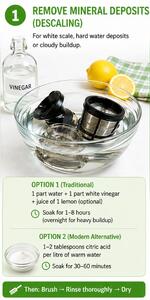
- Hard water areas: descale more often
Final Thoughts
Daily rinsing keeps your juicer usable—but regular deep cleaning keeps it safe, efficient, and long-lasting.
By combining consistent daily care with occasional deep cleaning using modern, food-safe methods, you’ll enjoy:
- Better-tasting juice
- Higher juice yield
- A longer lifespan for your juicer