Centrifugal Juicers vs Slow Juicers:

Is a €99 Juicer Worth It?

At EUJuicers, we’ve spent over 20 years focused almost entirely on juicing. We’ve been long-time advocates of slow juicers and were among the first major importers of slow juicing technology from South Korea into Europe.  And even today, we still believe slow juicers are the best choice for most people.  So why would a juicing specialist like us offer a centrifugal juicer for just €99?

Let’s take a closer look.

Centrifugal vs Slow Juicers: The Core Difference

The difference comes down to how juice is extracted.

A slow juicer (cold press juicer) works by slowly crushing and pressing ingredients at low speed with high pressure. This gentle process helps preserve nutrients and typically delivers higher juice yield and better quality.

A centrifugal juicer, on the other hand, works at very high speed. It shreds ingredients and uses centrifugal force to spin the juice away from the pulp.

In simple terms:

  • Slow juicer = gentle, efficient, high-quality juice

  • Centrifugal juicer = fast, convenient, more basic extraction

Why Consider a Centrifugal Juicer?

1. Price: The Most Affordable Way to Start Juicing

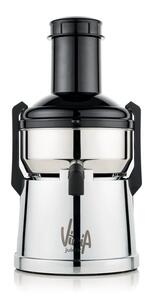
One of the biggest advantages of centrifugal juicers is accessibility.  High-quality slow juicers typically start at around €400–€600 and can go much higher depending on the model.  By contrast, the Vidia CJ-001 centrifugal juicer is available for just €99.  That makes it an easy entry point if you are curious about juicing but not ready to invest in a premium machine.  While juice quality and efficiency are lower compared to slow juicers, the result is still significantly better than most store-bought juices, which are often pasteurized or made from concentrate.

2. Speed: Where Centrifugal Juicers Excel

Speed is where centrifugal juicers truly stand out.  A slow juicer typically takes 5–10 minutes to prepare a juice, depending on ingredients.  A centrifugal juicer can often produce juice in under one minute.

This makes it ideal for:

  • Busy mornings
  • Office use
  • Holiday homes or occasional juicing

This speed is also why many commercial juice bars still rely on centrifugal machines.

The Trade-Offs You Should Know

With speed comes compromise.

Centrifugal juicers typically produce:

  • More foam in the juice
  • Slightly lower juice yield
  • Wetter pulp (less efficient extraction)

They also struggle with certain ingredients such as:

  • Leafy greens
  • Celery
  • Fibrous roots like turmeric

For these, slow juicers remain clearly superior.

A Practical Entry into Juicing

For many people, a centrifugal juicer is simply the first step into fresh juicing.  It’s affordable, fast, and easy to use, allowing you to build the habit and see if juicing fits your lifestyle.  If it does, upgrading to a slow juicer later is a natural progression—and one that delivers a noticeable improvement in juice quality and versatility.


ViDiA CJ-001_02
ViDiA CJ-001_02

What Makes the Vidia CJ-001 Stand Out?

If you are considering a centrifugal juicer, the Vidia CJ-001 offers several advantages:

  • Designed and manufactured in South Korea (rare in this category)
  • Stainless steel components for improved hygiene and durability
  • Dishwasher-safe parts for easy cleaning

While it doesn’t change the fundamental limitations of centrifugal technology, it does improve build quality and everyday usability.

Final Thoughts from Juicing Experts

At EUJuicers, our focus has always been on slow juicing—and that remains unchanged.  For those serious about long-term health, nutrition, and juice quality, a slow juicer is still the best investment.  However, if your priority is speed, convenience, or a very low entry cost, a centrifugal juicer can be a perfectly reasonable starting point.  At €99, it offers one of the simplest ways to begin your juicing journey.

And ultimately, the most important thing is simple:  Start juicing and build the habit.

Published: 14. July 2026